
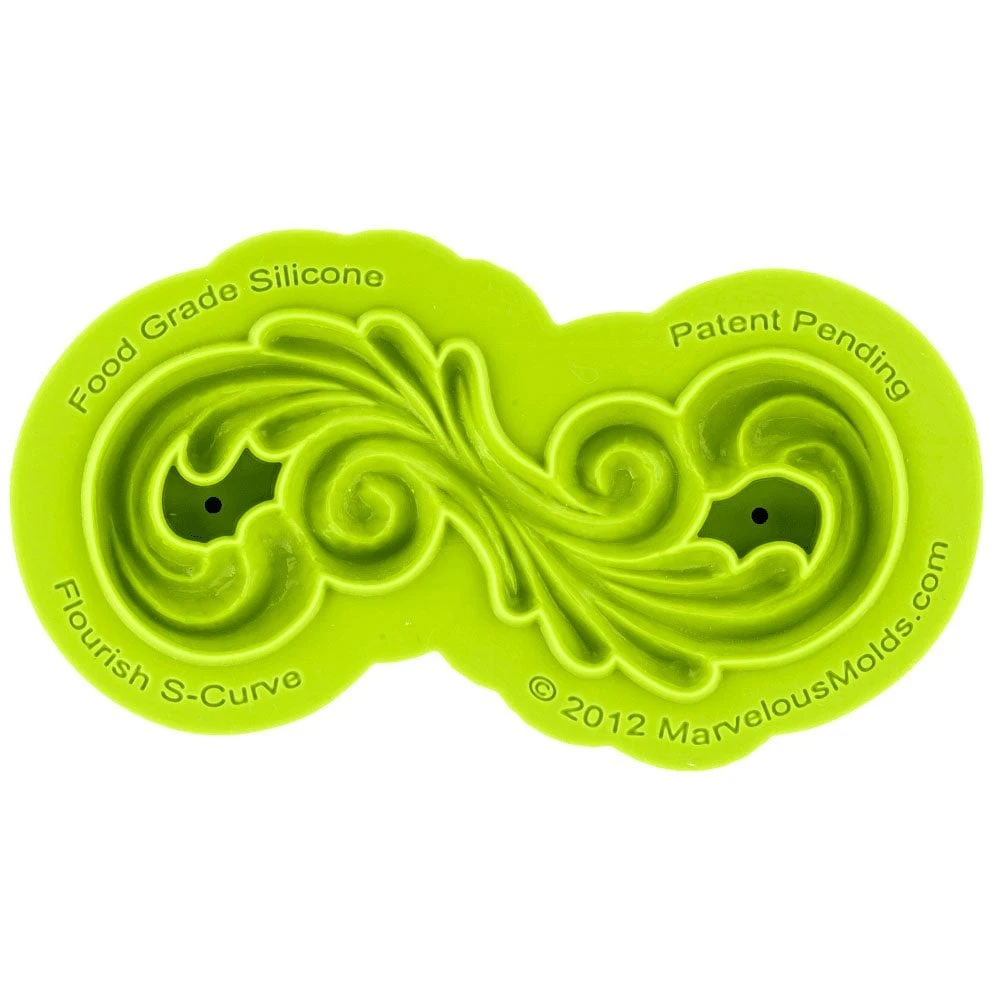
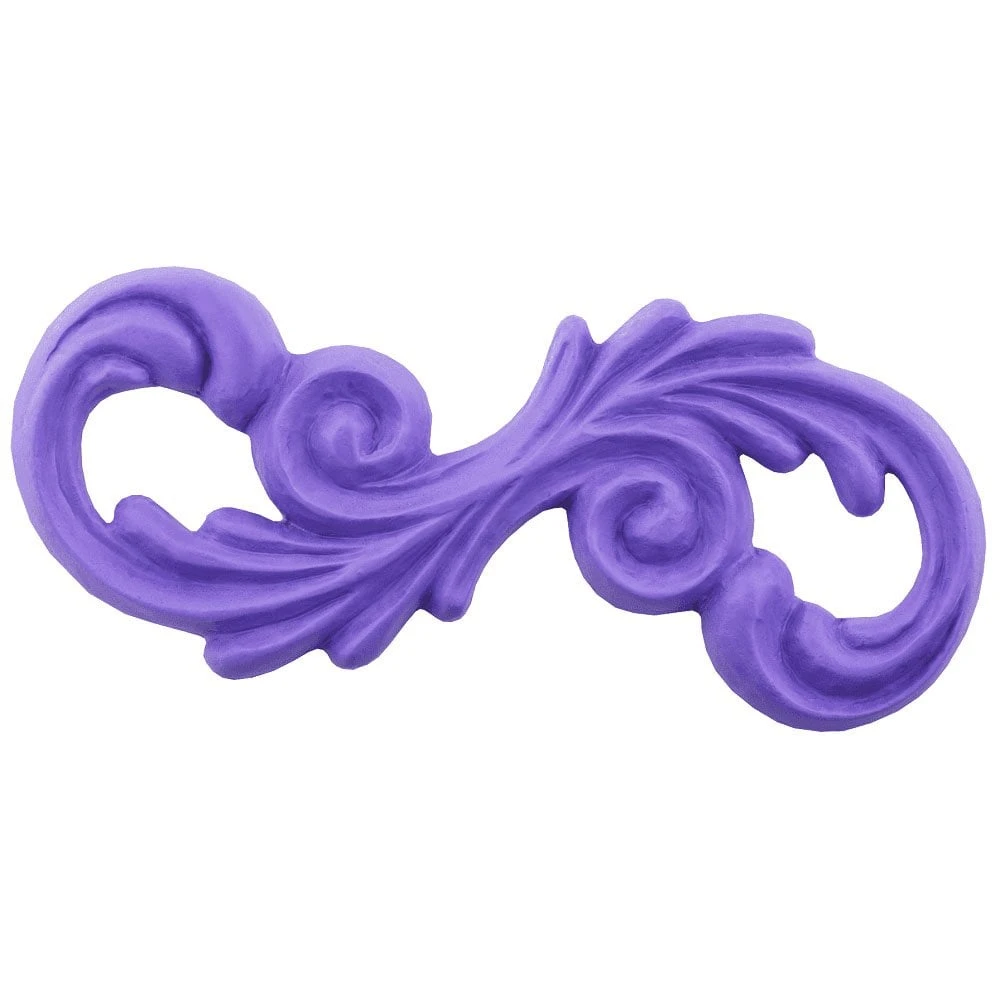
Marvelous Mould Flourish S-Curve Silicone Mould
Original price was: £15.16.£10.61Current price is: £10.61.
- Shop with Ease
- Multiple payment methods, safe and reliable
- Elevate Your Shopping Experience
- Shop with ease, buy with confidence.

Non-Food Uses Candle Making, Wax, Salt Dough, Plaster, Sculpting Clay, Polymer Clay, Soap, Cold Porcelain.
Things You Should Know:
1. Do not fill the mould to the top of the blade that rises up around the mould cavity. The mould should be filled to the top of the cavity which is level with the lip and the point where the blade starts to rise from the surface of the mould, people naturally will fill a mould to what they think is the top. If you fill to the top of the blade, the resulting piece will be too thick and not the way it was designed.
2. Put corn starch (corn flour) in a stocking, nylon, muslin tie shut to make what we call a pounce. Roll out fondant, sugar paste to the appropriate thickness, dust lightly with cornflour and put dusted side down onto mould. Press with palm of hand and fingertips forcing fondant into all the details. The blade will already start to cut the fondant. Take a light rolling pin and roll across the top of the mould. DO NOT PRESS HARD. LIGHT QUICK STROKES WORKS THE BEST AND ENABLES THE BLADE TO PERFORM PERFECTLY! ONCE THE FONDANT HAS BEEN TRIMMED AND THE EXCESS IS TAKEN AWAY PRESS FONDANT AGAIN REAL QUICK AND THEN PLACE YOUR FINGER ON THE SIDE OF THE BLADE AND PRESS IT SIDEWAYS TOWARDS THE CAVITY AND DOWN INTO THE CAVITY. This removes any little bits of fondant flashing and makes a perfect edge.
Be the first to review “Marvelous Mould Flourish S-Curve Silicone Mould”
Related products
Cake Decorating Tools
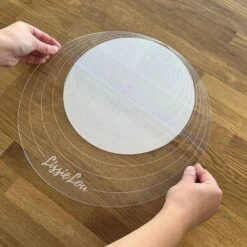
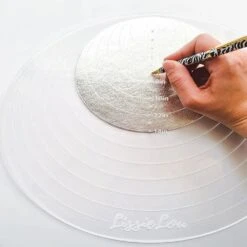
LissieLou Centre Point Template Cake Board Guide For Dowels – Round
Tools & Equipment

Chocolate Polycarbonate Moulds

Tools & Equipment
Tools & Equipment

Reviews
There are no reviews yet.